To style a gallery wall like a designer, start by selecting an eye-catching wall with good lighting and a harmonious color backdrop. Curate your art with intent, favoring pieces that echo personal stories or a defined palette. Mix frame styles for visual texture, but keep color tones cohesive. Map your layout using paper cutouts or sketches, spacing pieces evenly for flow. Anchor the arrangement with visually weighty works and repeat accent colors—there’s more to making your gallery wall stand out.
Key Takeaways
- Choose a prominent, well-lit wall with minimal visual distractions to showcase your gallery arrangement.
- Curate artworks and photos around a cohesive theme or color palette for a unified, intentional look.
- Mix frame styles, materials, and sizes but maintain color coordination for visual interest and harmony.
- Plan your layout using sketches or paper templates to perfect spacing, alignment, and overall composition before hanging.
- Arrange pieces by balancing visual weight, repeating accent colors, and allowing for consistent gaps to create flow and structure.
Choosing the Right Wall and Space

Before you begin curating art, assess your home’s architecture and identify a wall that naturally draws the eye—often a spacious living room backdrop, a hallway stretch, or above a staircase.
Prioritize surfaces with minimal visual interruptions like windows, vents, or molding, allowing for uninterrupted composition.
Analyze the wall color; lighter tones provide a neutral canvas that enhances contrast, while bold hues can underscore specific frames or artwork.
Factor in lighting considerations—natural daylight accentuates true color fidelity, but harsh glare or inconsistent shadows can diminish impact.
For ideal display, choose a wall bathed in diffuse, ambient light or supplement with adjustable gallery lighting. This guarantees your selected space elevates each piece, creating a sophisticated foundation for your gallery wall’s overall visual narrative.
Curating Art and Photos With Intention

While a gallery wall thrives on visual diversity, intentional curation guarantees every piece contributes to a cohesive story.
Start by defining your art theme—whether it’s abstract, botanical, or a personal photo collection. This sets the narrative and directs your selections.
Next, establish a unifying color palette to visually anchor disparate works, ensuring each piece enhances rather than overwhelms. Carefully edit your choices so each image or painting holds personal or aesthetic value, avoiding random additions for filler.
- Clarify your art theme: Choose a central concept, such as travel, family, or modern art, to create focus.
- Edit with purpose: Select only artworks or photos that evoke emotion or complement your story.
- Plan your color palette: Limit hues for harmony, or repeat accent colors for cohesion throughout the gallery.
Mixing and Matching Frames for Visual Interest
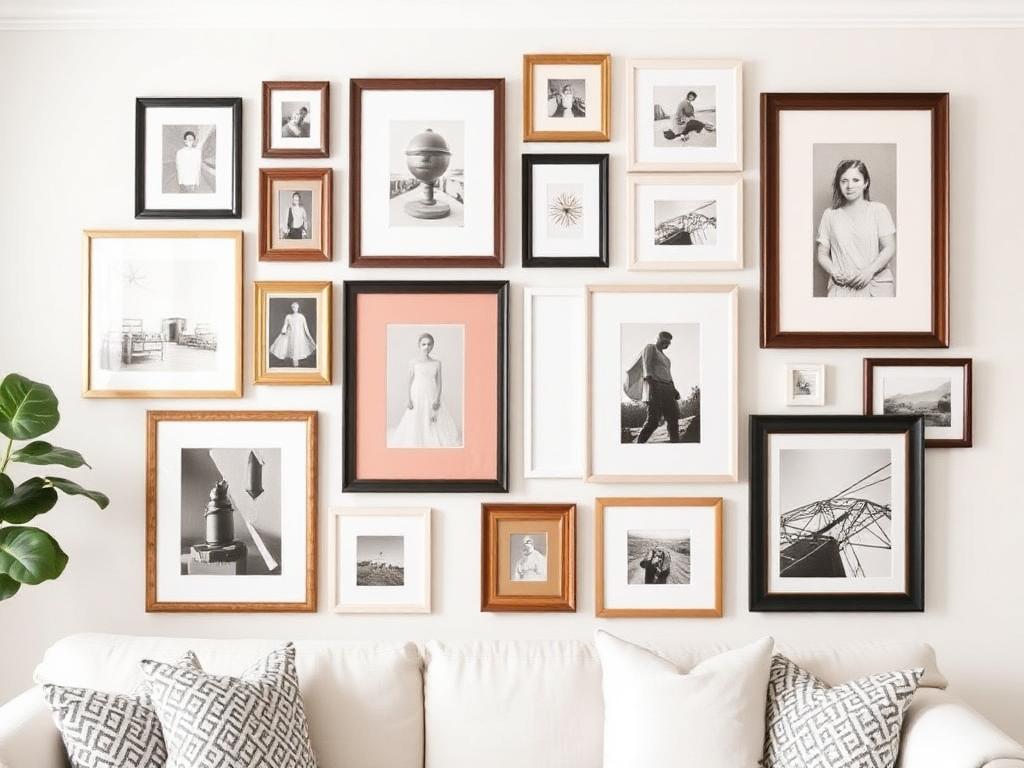
Frame selection serves as both a complement and contrast to your curated artworks, infusing the gallery wall with dynamic visual layers.
When you mix frame styles—think sleek metal, ornate gilt, or minimalist wood—you create tactile intrigue and highlight each piece’s unique character.
Don’t hesitate to juxtapose modern profiles with vintage silhouettes; this interplay draws the eye and avoids monotony.
For cohesive color coordination, select a unifying palette. Use frames in coordinating hues or finishes, or introduce subtle variation within a defined color story.
Black, white, and natural wood frames can harmonize diverse artwork while providing distinction.
Remember, proportional variety in frame width and matting elevates dimensionality.
Thoughtful selection and combination of frames guarantee your gallery wall feels intentional yet visually engaging, never chaotic.
Planning Your Layout Before Hanging

Once you’ve curated your artwork and frames, mapping out the gallery wall’s arrangement becomes essential for a harmonious result.
Before hammering a single nail, invest time in layout sketches to visualize spatial relationships and guarantee each piece has its intended impact.
Pay close attention to spacing considerations; inconsistent gaps can disrupt the gallery’s rhythm and cohesion. Use painter’s tape or kraft paper cutouts to experiment with scale and placement directly on your wall.
To streamline your planning process, focus on these steps:
- Draft layout sketches on paper, exploring various compositions and orientations.
- Assess spacing considerations by measuring consistent gaps—typically 2 to 3 inches—between pieces for a unified aesthetic.
- Mock up your arrangement with paper templates, adjusting until your vision feels balanced and intentional.
Arranging Artwork for Balance and Flow

After finalizing your gallery wall’s layout on paper or with templates, focus on arranging your artwork to achieve visual balance and dynamic flow.
Position pieces with greater visual weight—such as bold colors or larger frames—strategically, dispersing them to anchor the composition rather than letting one side feel heavier.
Integrate color harmony by repeating or echoing hues throughout the arrangement, ensuring a cohesive, unified visual story.
Vary frame sizes and matting, but maintain consistent spacing between pieces to create structured rhythm.
Let each artwork “breathe” by avoiding overcrowding.
Flow is enhanced by aligning edges or establishing sightlines that guide the viewer’s eye naturally across the display.
Adding Personal Touches and Final Details
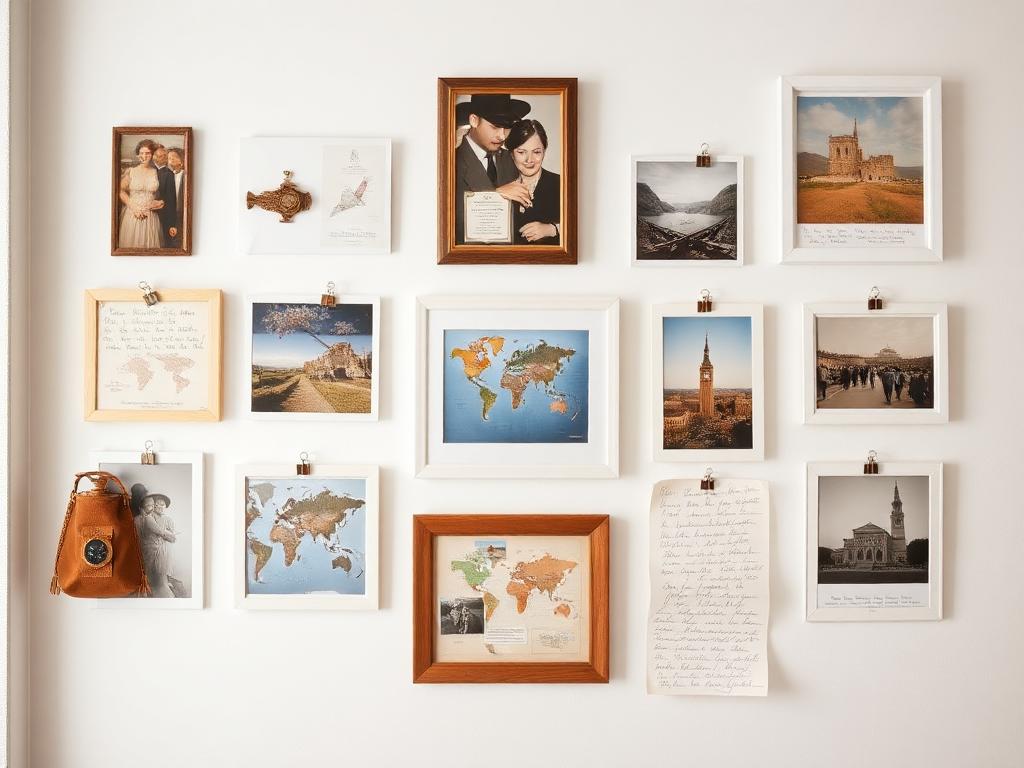
While the foundation of your gallery wall lies in thoughtful arrangement, it’s the personal touches and meticulous final details that elevate the display from curated to truly bespoke.
To achieve designer-level cohesion, infuse your wall with meaningful elements that reflect your narrative. Incorporate personal memorabilia—such as travel mementos, heirloom photographs, or handwritten notes—to weave your story throughout the composition.
Select unique accents like sculptural objects or dimensional pieces to break the visual plane and add tactile interest. Finally, scrutinize lighting and spacing to guarantee every piece receives the attention it deserves.
- Curate a mix of personal memorabilia for authenticity.
- Integrate unique accents for dynamic depth and texture.
- Adjust lighting and spacing to highlight each element’s significance.
These finishing touches create an evocative, personalized gallery wall.
Conclusion
By thoughtfully selecting your wall, curating meaningful art, and mixing frame styles, you’re creating more than decor—you’re crafting a visual narrative. Plan your layout meticulously for balance and allow negative space to highlight each piece. Don’t forget those personal touches; they transform your gallery from generic to bespoke. With these designer strategies, your gallery wall isn’t just arranged—it’s orchestrated, visually dynamic, and uniquely yours, anchoring your space with intentional style and cohesive impact.