To quickly declutter your living room, start by defining your ideal look and purpose for the space. Remove unnecessary furniture, sort items into categories, and only keep what you use or love. Use vertical storage, keep flat surfaces clear, and choose multipurpose furniture.
Create zones for activities, manage cords with organizers, and regularly tidy up. Stick to these easy habits and you’ll find your living room stays fresh—there are even more helpful tips just ahead.
Start With a Clear Vision
Before you start moving anything, ask yourself: what do you want your living room to look and feel like? Picture how you want the space to function. Do you imagine calm, open areas for relaxing, or do you prefer a lively, social vibe? Clarify the purpose—hosting guests, family movie nights, reading, or a mix. Identify colors, styles, and the atmosphere you’d like to create.
Make a quick list or gather a few inspiration photos. This step helps set priorities and keeps you focused as you declutter. With a clear vision, you’ll make smarter decisions about what belongs in the space. Every item should serve your ideal living room. When your vision guides you, you’ll declutter with intention and confidence.
Remove Unnecessary Furniture
With your vision in mind, take a look at the furniture in your living room and ask what truly supports the space you want to create. Identify pieces that serve little purpose or make the room feel cramped.
Don’t hold onto items out of habit—if a chair, side table, or bulky shelf isn’t adding comfort or function, it’s time to let it go. Move these unnecessary pieces out of the room to open up the space instantly.
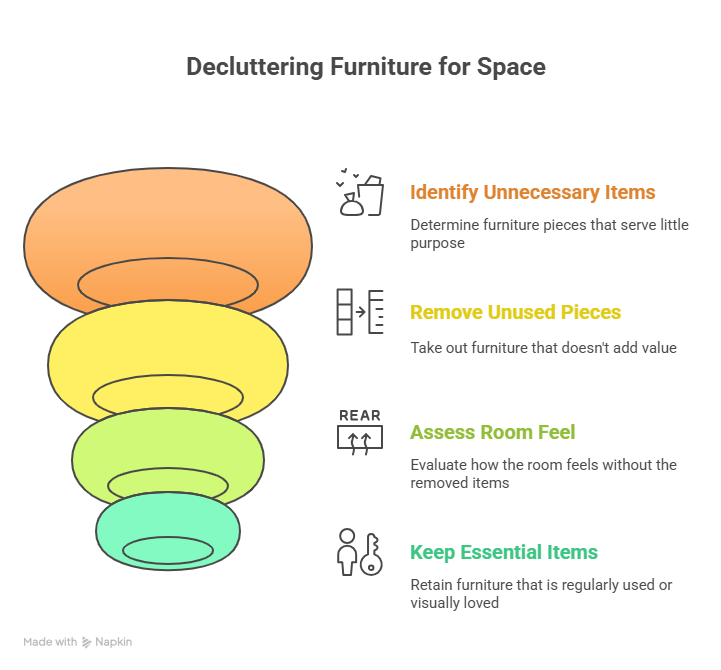
Focus on keeping only what you use regularly or love visually. Less furniture means easier movement and a more inviting atmosphere. If you’re unsure about certain items, temporarily remove them and see how the room feels. Remember, your goal is a balanced, clutter-free living area that fits your lifestyle.
Sort and Categorize Items
Once you’ve cleared out excess furniture, turn your attention to everything else in the room. Start by gathering all loose items—books, magazines, remote controls, toys, and decor. Place them in the center of the room so you can see exactly what you have. Next, group similar items together. Sort books with books, electronics with electronics, and so on. This step makes it easier to identify duplicates and things you no longer need. Be honest about what you actually use.
If something hasn’t been touched in months, consider donating or discarding it. Keep only what’s necessary or meaningful. By sorting and categorizing, you’ll create a solid foundation for a clutter-free living room and make the rest of the process much smoother.

Utilize Vertical Storage Solutions
Although floor space may be limited, you can maximize storage by thinking vertically. Install wall-mounted shelves to keep books, decor, or baskets off the floor and within easy reach. Tall bookcases or storage towers use otherwise empty wall space and help organize items neatly. Hang hooks for bags, keys, or hats to reduce clutter on other surfaces.
Consider cabinets or floating shelves above your sofa or TV unit for extra storage without eating up floor area. Use vertical storage units that reach toward the ceiling to take full advantage of your room’s height. When you store items upwards, you’ll free up precious floor space and make your living room appear larger and more organized. Prioritize sturdy, attractive shelving to complement your décor.
Keep Flat Surfaces Clutter-Free
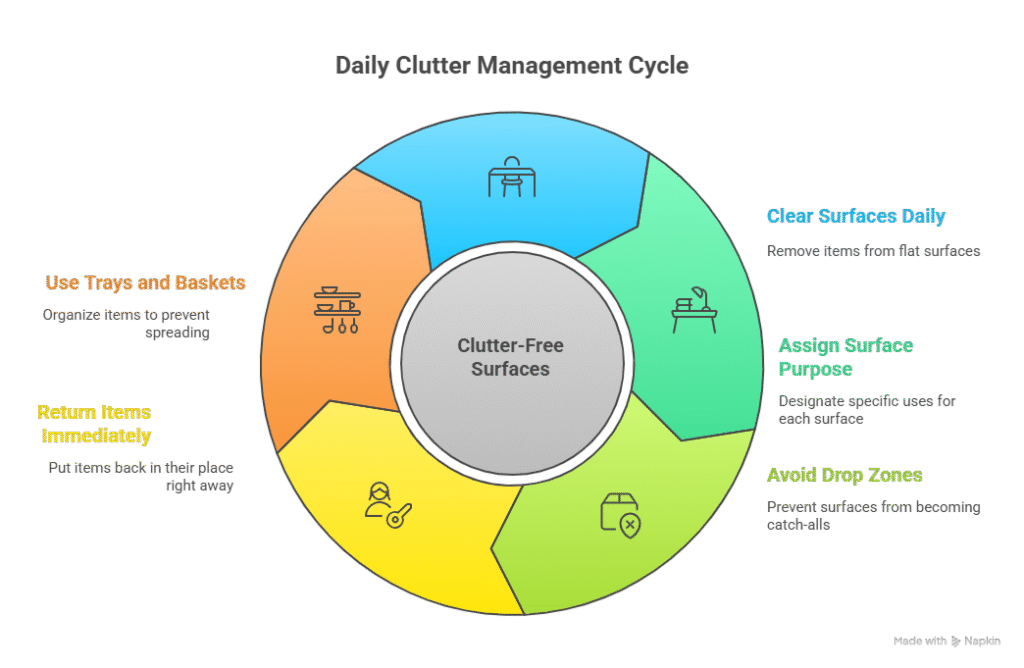
Even if you’ve tackled storage elsewhere, it’s easy for flat surfaces like coffee tables, side tables, or TV stands to collect random items throughout the week. To keep these areas clutter-free, make it a habit to clear them off daily. Assign a specific purpose to each surface—maybe just a lamp, a decorative tray, or a single book.
Avoid using these spots as drop zones for mail, keys, or gadgets. If something doesn’t belong, return it to its rightful place right away. Use trays or small baskets to corral necessary items and prevent messes from spreading. By consistently resetting these surfaces, you’ll maintain a tidy, welcoming space that feels organized and calm, making your living room much more enjoyable for everyone.
Optimize Media and Electronics Storage
Clear surfaces make your living room feel open, but tangled cords and scattered remotes can quickly undo that calm. Start by grouping all electronics, remotes, and media devices together. Use a media console or TV stand with closed cabinets to hide clutter and keep devices organized. Store DVDs, gaming equipment, and accessories in labeled bins or baskets inside the console. Bundle and conceal cords using cable organizers or clips, running them neatly behind furniture.
Place a small tray or box on the console to corral remotes, making them easy to find. Regularly assess your electronics—don’t let outdated or unused items pile up. By streamlining your media and electronics storage, you’ll maintain a tidy, functional space that supports relaxation and entertainment.
Incorporate Multipurpose Furniture
When you choose multipurpose furniture, you instantly maximize both space and function in your living room. Look for pieces like ottomans with hidden storage, coffee tables that double as desks, or sofas with built-in shelving. These items let you store blankets, books, or remote controls out of sight, reducing surface clutter and making your space feel more organized.
Consider a storage bench under a window or nesting tables you can tuck away when not in use. Pick furniture that adapts to your needs—think a fold-out sofa bed for guests or a console table that serves as a workspace. By opting for versatile pieces, you’ll keep your living room tidy and flexible, ensuring every item earns its place.

Designate Zones for Common Activities
Multipurpose furniture helps you save space, but a clutter-free living room also benefits from clearly defined zones for your daily activities. Start by identifying the main functions your living room serves—perhaps relaxing, reading, and entertaining. Assign a specific area for each activity. For example, arrange cozy seating around a coffee table for conversation, set up a reading nook near a window with a small shelf and lamp, or dedicate a corner for board games.
Use rugs, shelving, or furniture placement to visually separate these zones. Store items needed for each activity within their respective areas to avoid spreading clutter. By giving every activity its own space, you’ll keep the room organized and make it easier to maintain a tidy environment.
Manage Cords and Cables Effectively
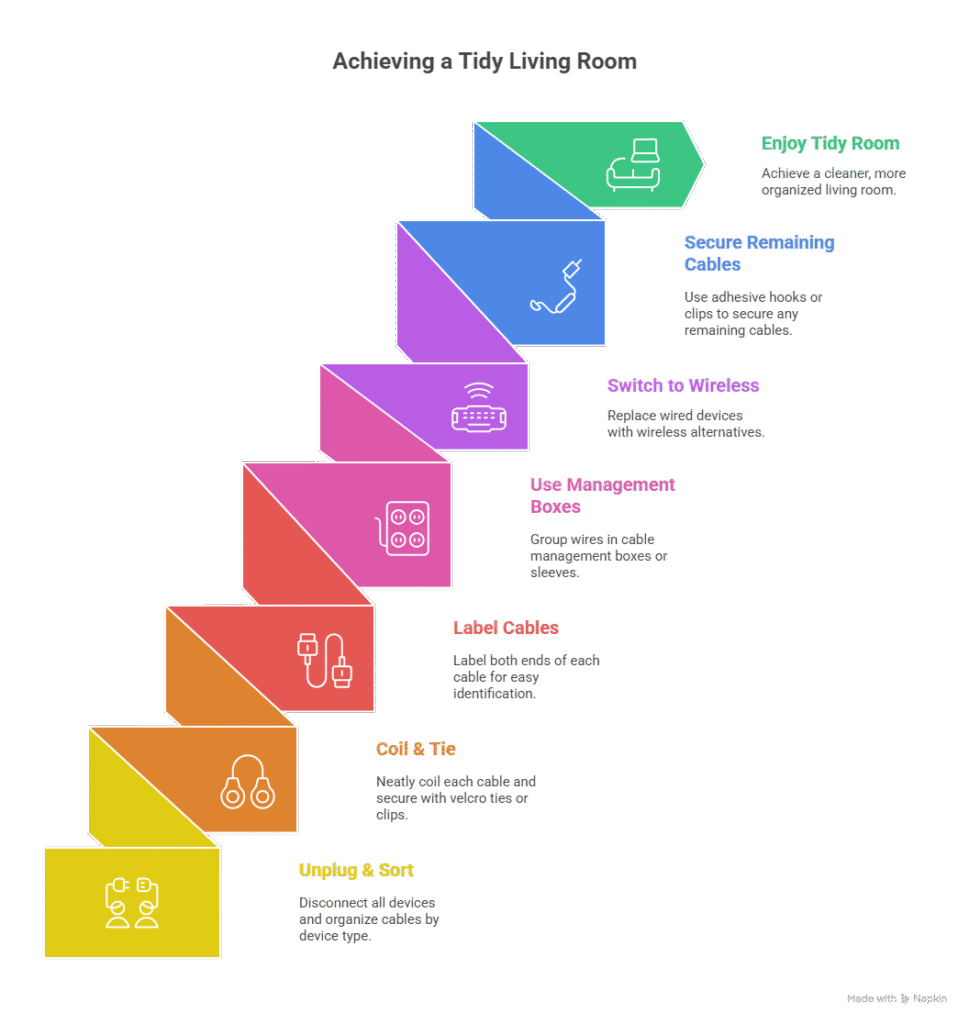
While it’s easy to overlook, tangled cords and cables can quickly make your living room look messy and disorganized. Start by unplugging everything and sorting cables by device. Coil each cord neatly using velcro ties or cable clips to prevent tangling. Label both ends of each cable so you can easily identify them later.
Use cable management boxes or sleeves to group wires together and keep them hidden behind furniture or along baseboards. If possible, switch to wireless devices to reduce cord clutter altogether. Secure any remaining cables with adhesive hooks or clips to prevent them from trailing across the floor. By managing cords and cables effectively, you’ll instantly create a cleaner, tidier look and make it easier to access your electronics.
Establish a Regular Maintenance Routine
Once cords and cables are neatly managed, keeping your living room clutter-free becomes much easier. The key is to set up a regular maintenance routine. Schedule a quick weekly tidy-up—just fifteen minutes can make a difference. During this time, put away stray items, fluff cushions, and wipe surfaces. Return books, remotes, and blankets to their designated spots. Every month, do a deeper check: remove anything you no longer use or need, and reorganize shelves or storage baskets if necessary.
Make decluttering a shared task if you live with others—assign simple responsibilities to keep everyone involved. By tackling messes before they build up, you’ll maintain a fresh, inviting living room with very little effort. Consistency is essential for lasting results, so stick with your routine.
Conclusion
Decluttering your living room doesn’t have to be overwhelming. Start with a clear plan, let go of what you don’t need, and use smart storage solutions. Keep surfaces tidy, choose furniture that serves more than one purpose, and create zones for different activities. Don’t forget to tame those cords and maintain your efforts regularly. With these simple steps, you’ll transform your living room into a welcoming, organized space you’ll actually want to spend time in.