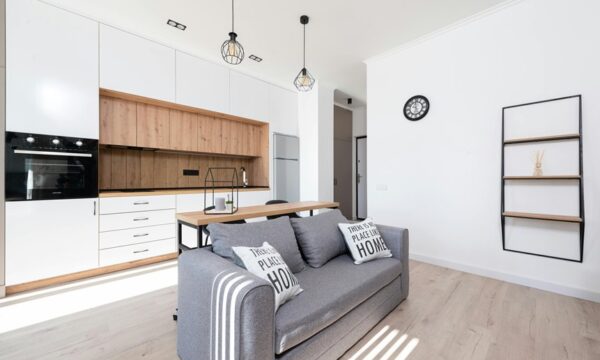
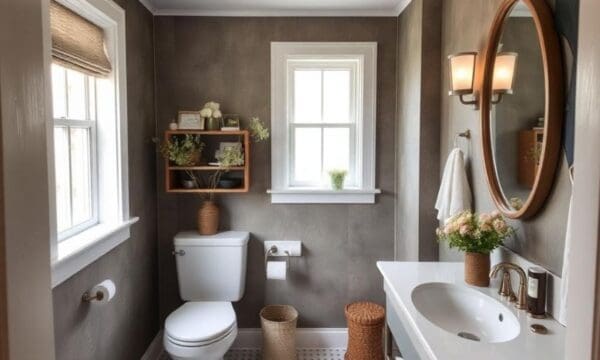
To organize a shared family room, start by asking everyone about their needs and daily routines. Divide the space into clear activity zones using rugs or shelves, and pick furniture that does double duty, like storage ottomans or nesting tables. Use vertical shelves and labeled bins to keep things tidy, and set up simple systems for daily cleanup. Choose colors and styles that feel welcoming. There are more practical ideas you can use to make your family room stress-free.
Assessing the Needs of All Family Members
How do you guarantee your shared family room works for everyone? Start by asking each family member what’s important to them in the space. Do you need a spot for kids’ toys, a reading nook, or a place for movie nights? Create a simple checklist and jot down everyone’s must-haves. Listen to each person’s preferences, including storage needs and favorite activities. Consider routines—who uses the room in the morning, after school, or late at night?
Don’t forget about pets or frequent guests. Once you’ve gathered feedback, look for patterns and prioritize essentials. This way, you’ll avoid conflicts later and make sure the room serves everyone’s needs. Clear communication at this stage sets you up for a functional, welcoming family room.
Creating Distinct Zones for Activities
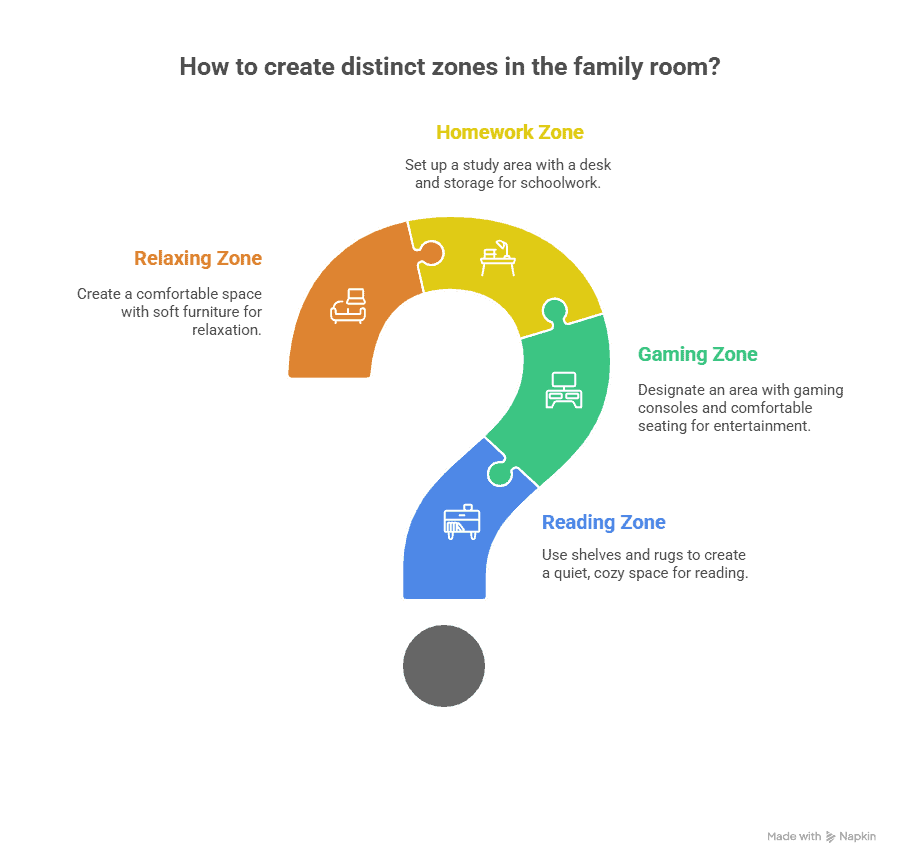
Once you’ve gathered everyone’s input, it’s time to give each activity a dedicated spot within the family room. Start by mapping out the room and dividing it into clear zones—reading, gaming, homework, or relaxing. Use area rugs, shelves, or even low bookcases to visually separate these spaces. Assign each zone a specific purpose, and make sure it’s easily accessible for those who’ll use it most. Keep noisy play areas away from quieter corners meant for reading or homework.
Label bins or baskets in each zone for quick cleanup. Make walkways between zones wide and clutter-free to keep the room feeling open. By defining these areas, you’ll help everyone know where their things belong and keep the space organized.
Choosing Multi-Functional Furniture
When space is at a premium, multi-functional furniture can make a big difference in keeping your family room organized and flexible. Start by choosing pieces that serve more than one purpose. Look for ottomans with hidden storage, sleeper sofas for guests, or coffee tables that convert to desks. These options help you adapt the room to different needs without adding clutter. Select furniture with clean lines and neutral colors to blend seamlessly with various activities and styles.
Don’t overlook nesting tables—they tuck away neatly and provide extra surface area when needed. Before buying, measure your space and consider how each piece will be used daily. By investing in multi-functional items, you’ll keep the shared space comfortable, organized, and ready for any family activity.
Maximizing Vertical and Hidden Storage
Multi-functional furniture lays a strong foundation for an organized family room, but making the most of your vertical and hidden storage options will take your space to the next level. Start by installing shelves or cabinets up high to utilize wall space for books, baskets, or decorative bins. Use tall bookcases or ladder shelves to store toys, games, or craft supplies vertically, keeping floors clear. Consider wall-mounted hooks or pegboards for hanging bags or hats.
Next, look for hidden storage—think ottomans with lift tops, sofas with built-in compartments, or benches with storage beneath the seat. Tuck less-used items in these spots to reduce clutter. By maximizing both visible and concealed storage, you’ll keep essentials accessible while maintaining a tidy, welcoming family room.

Implementing Easy-to-Maintain Systems
Even with ample storage, an organized family room only stays clutter-free if you set up systems everyone can easily follow. Start by labeling bins, baskets, or shelves so each item has a clear home. Assign categories—like games, books, or electronics—to specific areas. Use color-coded containers for different family members or activity types. Keep everyday essentials within reach and less-used items higher or further back.
Place a tray for remote controls or a basket for magazines to prevent scatter. Opt for open storage solutions so it’s obvious where things belong. Regularly review your setup and adjust as needs change. When you create simple, visible systems, you make it much easier for everyone to put things away and keep the space looking tidy.
Encouraging Daily Tidy-Up Habits
Although an organized setup makes tidying easier, building daily habits guarantees your family room stays neat. Start by setting a regular time, like before dinner or bedtime, for a quick tidy-up. Encourage everyone to spend five minutes returning items to their designated spots. Make it fun—play upbeat music or set a timer for a family challenge.
Assign age-appropriate tasks so every family member knows what to do. Keep a small basket handy for stray items that need to go elsewhere. Praise your kids and each other for their efforts, reinforcing positive routines. By making tidying a shared, everyday activity, you’ll prevent clutter from piling up. Consistency is key—these small actions, done daily, keep your shared family room organized and welcoming.

Personalizing the Space for Comfort and Style
When you personalize your family room, you create a space that feels inviting and uniquely yours. Start by choosing a color palette that everyone enjoys, using throws, pillows, or area rugs to introduce warmth and texture. Add family photos or children’s artwork in coordinated frames to give the room a personal touch. Incorporate comfortable seating, like a sectional or bean bags, ensuring there’s enough space for everyone.
Display meaningful objects, such as travel souvenirs or favorite books, on shelves or coffee tables. Use baskets or decorative bins to keep essentials within reach but still organized. Finally, add adjustable lighting—floor lamps, table lamps, or dimmers—to create the right mood for every occasion. Prioritize items that reflect your family’s interests and style.
Conclusion
By considering everyone’s needs and creating dedicated zones, you’ll make your shared family room both functional and inviting. Opt for furniture that serves more than one purpose and use vertical or hidden storage to keep clutter at bay. Set up easy systems so tidying up doesn’t feel overwhelming, and encourage everyone to help out daily. Finally, add personal touches for comfort and style. With these strategies, your family room will stay organized and welcoming for everyone.