You can make playroom cleanup a breeze with multi-functional furniture like benches or tables with built-in storage, and keep toys organized using colorful bins, baskets, or cubbies at kid-friendly heights. Try floating shelves, pegboards, or wall racks to use vertical space, and add clear labels or picture icons for easy sorting.
Rotate groups of toys to reduce clutter and boost excitement. Curious about even more creative solutions for a tidy, inviting playroom? Keep going!
Multi-Functional Furniture for Toy Organization
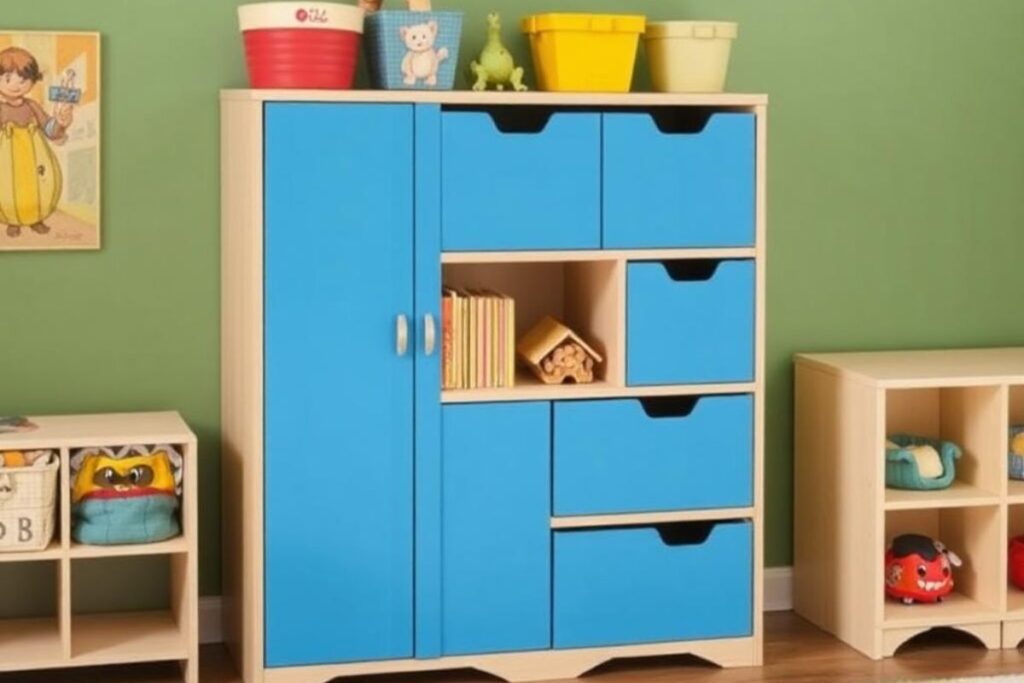
A smart way to tackle playroom clutter is by choosing multi-functional furniture that doubles as storage. Instead of filling the room with bulky bins, pick pieces like storage benches or ottomans where you can stash toys out of sight. Look for play tables with built-in bins or drawers—these make clean-up a breeze and keep favorite items close at hand. Opt for bookshelves with cubby compartments and add labeled baskets to sort blocks, puzzles, or art supplies.
You’ll maximize your space and make it easier for kids to help with organizing. Don’t forget beds or sofas with pull-out drawers underneath for bulky items. When you choose furniture with hidden storage, you keep the playroom both tidy and welcoming for all kinds of adventures.

Creative Wall Storage and Shelving
Once you’ve made the most of your furniture for storage, take a look at your walls—they offer plenty of untapped potential for organizing toys and supplies. Install floating shelves at kid-friendly heights to display favorite books, puzzles, or collectibles. Pegboards are another great option; you can customize them with hooks, baskets, and bins for art supplies or small toys. Don’t forget about wall-mounted racks for things like dress-up clothes or sports equipment.
You might also try using magnetic strips for metal toys or containers. Label each shelf or section so your child knows where things belong, making clean-up easier. By thinking vertically, you’ll free up valuable floor space and keep the playroom tidy while still making everything easy for little hands to reach.
Bins, Baskets, and Cubbies for Easy Access
Because kids thrive with straightforward systems, bins, baskets, and cubbies make playroom clean-up a breeze. You can set up low cubbies so little ones can grab toys or put them away without help. Choose sturdy bins and baskets in fun colors and sizes that fit neatly into the cubbies. This not only keeps the floor clear but also encourages kids to sort toys by type—think blocks, cars, or dolls.
Keep heavier items on the bottom shelves for safety, and use soft baskets for plush toys. Stackable bins are great if you need flexibility as your storage needs change. Place your most-used toys at arm’s reach, and reserve higher shelves for seasonal or less-frequently played-with items. This way, everything’s easy to find and put away.

Labeling Systems for Tidy Spaces
When bins and cubbies are in place, adding clear labels takes organization to the next level. Labels make it easy for kids to know exactly where toys belong, so cleanup becomes a simple part of playtime. Use large, easy-to-read fonts and bold colors. For little ones who can’t read yet, include pictures or icons next to the words—think cars, blocks, or dolls.
Laminate labels for durability, or use wipe-off tape for flexibility as toy collections change. Attach labels at your child’s eye level for quick recognition. Get kids involved by letting them help pick label designs or images. With everything clearly marked, you’ll spend less time tidying up and more time enjoying a neat, inviting playroom together.
Vertical Storage to Maximize Floor Space
Although playrooms can quickly become crowded, vertical storage offers a smart way to reclaim valuable floor space. By thinking upward, you’ll keep more of the floor open for play while making toys and supplies easy to access. Try installing sturdy wall shelves at different heights to store bins, books, or art materials.
Tall cubby units or bookcases work well for grouping similar toys together and keep items off the ground. Pegboards or wall-mounted racks let you hang baskets, costumes, or craft tools, turning empty walls into functional storage zones. Remember to anchor any tall furniture to the wall for safety. When you use vertical solutions, you’ll notice less clutter underfoot and more room for play, creativity, and fun in your child’s space.
Rotating Toy Systems for Clutter Control
Vertical storage clears the way for more play space, but overflowing bins and shelves can still leave a playroom feeling chaotic. That’s where a rotating toy system comes in handy. Rather than crowding every toy onto the shelves, sort toys into several groups and keep only one group accessible at a time.
Store the rest in bins or boxes out of sight. Every few weeks, swap the available toys for a fresh batch. Kids will be excited to rediscover “new” toys, and cleanup becomes easier with less out at once. Label boxes so you know what’s inside, and involve your child in the rotation to build anticipation. This system keeps clutter in check and encourages deeper, more focused play.
Conclusion
With the right storage solutions, you can turn any playroom into a tidy, inviting space your kids will love. Use multi-functional furniture, creative wall shelves, and labeled bins to keep toys organized and easy to find. Don’t forget to think vertically and rotate toys to reduce clutter. By mixing these ideas, you’ll create a playroom that’s both fun and functional—giving your children more room to play, imagine, and grow every day!