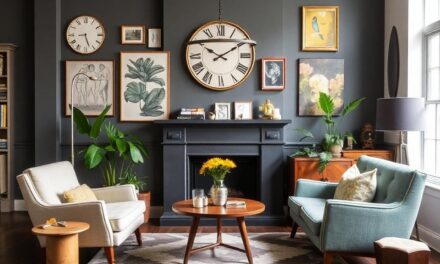
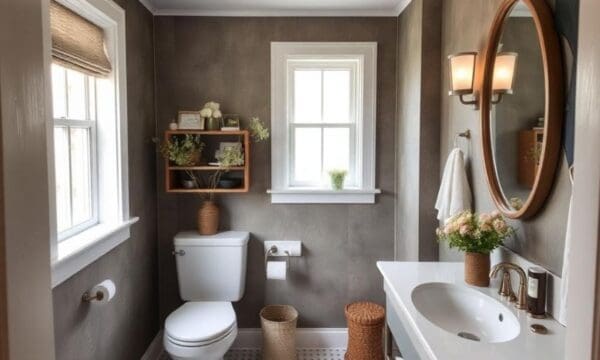
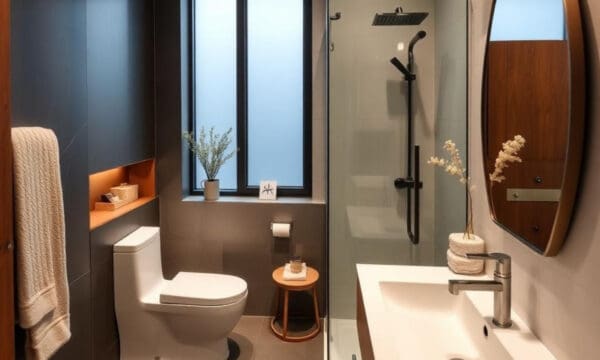
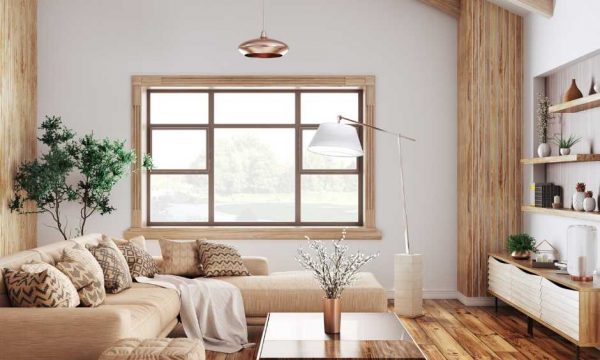
To make a room feel bigger, select an oversized or well-proportioned mirror and place it opposite a window to amplify natural light and expand sightlines. Layer in a gallery wall of mirrors for depth and visual rhythm, or add mirrored furniture for extra luminosity. Reflect striking views or art to enhance spatial perception. Clever positioning blurs boundaries and infuses airiness into your space. There are even more transformative mirror techniques just ahead.
Key Takeaways
- Choose large mirrors or ones at least two-thirds the width of nearby furniture to visually expand the room.
- Place mirrors directly opposite windows to reflect natural light and create a sense of greater depth.
- Arrange multiple mirrors in a gallery-style display to amplify light and add dynamic visual interest.
- Incorporate mirrored furniture or accents to scatter light and enhance the feeling of spaciousness.
- Position mirrors to reflect attractive views or artwork, drawing the eye and increasing perceived room size.
Choose the Right Mirror Size
One well-chosen mirror can dramatically alter a room’s perceived proportions.
When selecting a mirror, you’ll want to pay close attention to mirror dimensions. Oversized mirrors create an immediate sense of depth, expanding sightlines and making the walls appear to recede. For smaller rooms, a mirror that’s at least two-thirds the width of the furniture it hangs above feels balanced and intentional.
Don’t just consider size—appropriate styles are essential. A sleek, frameless mirror suits modern aesthetics, while ornate frames complement traditional or eclectic interiors. Rectangular mirrors elongate walls, while round shapes soften sharp angles.
Always match the mirror’s scale to your existing décor. By thoughtfully choosing the right mirror size and style, you’ll achieve a harmonious look that visually amplifies your space.
Position Mirrors Opposite Windows
After selecting a mirror with the right proportions and style, maximize its impact by strategically placing it opposite a window. This placement harnesses natural light reflection, instantly brightening the room and creating the illusion of expanded space.
When you align the mirror to directly face the window, you double the visual depth and bring the outdoors in, making the area feel airier and more dynamic.
Focus on window framing; the mirror should capture as much of the window view as possible. This not only amplifies daylight but also visually extends the landscape, effectively blurring the boundaries of your interior.
Positioning your mirror with precision makes the most of both light and view, transforming your space with minimal effort and maximum style.
Use Multiple Mirrors for a Gallery Effect
Several well-chosen mirrors arranged in a gallery-style display instantly energize a room, multiplying light and dimension across every surface.
To achieve this effect, create a gallery wall using an eclectic mix of mirror styles—combine round, rectangular, and even vintage frames for dynamic visual interest. Vary the sizes and finishes to add texture and depth, drawing the eye throughout the space and amplifying perceived square footage.
When you curate your gallery wall, experiment with both symmetrical and asymmetrical layouts to complement your existing décor. The reflective surfaces break up solid wall expanses, creating intriguing vignettes and bounce natural or artificial light around the room.
Incorporate Mirrored Furniture
While traditional wood or upholstered pieces can sometimes weigh down a small room, mirrored furniture introduces instant luminosity and openness. By selecting items such as mirrored coffee tables, nightstands, or buffets, you infuse your space with reflective surfaces that capture and scatter natural light. This creates the visual illusion of greater depth, making the room feel more expansive and airy.
Opt for furniture with mirrored accents—think drawer fronts, tabletops, or cabinet doors—to achieve a balanced effect without overwhelming the space. These stylish designs complement a range of interiors, from modern minimalism to Art Deco glamour.
Position mirrored pieces strategically to reflect interesting views or colors in your room. With careful placement, mirrored furniture transforms a compact area into a sophisticated, light-filled retreat.
Place Mirrors Behind Light Sources
Ever wondered how to double the impact of your lighting without adding extra fixtures?
Placing mirrors behind light sources is a strategic way to enhance both light reflection and ambient brightness in any space. This technique not only maximizes your existing light but also creates the illusion of greater depth and openness.
Here’s how you can implement this approach:
- Position a mirror directly behind a table lamp to amplify its glow across the room.
- Place wall sconces on either side of a large mirror to diffuse light and soften shadows.
- Set a mirror behind a pendant or chandelier to reflect light upward and outward, brightening the ceiling and walls.
- Use mirrored trays under candles or small lamps to scatter light and elevate the overall atmosphere.
Opt for Floor-to-Ceiling Mirrors
If you want to dramatically expand your room’s sense of scale, floor-to-ceiling mirrors deliver unmatched visual impact. By spanning the entire height of a wall, these mirrors erase physical boundaries and double the perceived space, creating a seamless extension of your interiors.
Choose mirror styles that complement your design scheme, whether you prefer sleek frameless panels for a contemporary look or decorative frames for added character.
Strategic mirror placement is essential—install mirrors on walls opposite windows or architectural features to amplify natural light and architectural depth.
Floor-to-ceiling mirrors suit living rooms, bedrooms, and entryways, instantly making them feel brighter and more open.
When installed with precision, they become both a functional and striking design element, transforming confined areas into expansive environments.
Reflect Interesting Views
One of the most effective ways to maximize a mirror’s impact is to position it so it reflects an interesting or beautiful view.
Instead of just bouncing light, your mirror can capture artistic reflections and scenic displays, transforming the room’s entire atmosphere. When planning your layout, consider what’s visible in the mirror’s frame—this can enhance both depth and visual intrigue.
To create a sophisticated effect, try the following:
- Place a mirror opposite a window to double the effect of a garden or skyline.
- Angle mirrors to showcase a striking piece of art or a sculptural light fixture.
- Reflect a lush indoor plant display for natural vibrance.
- Capture architectural details, like elegant molding or a unique accent wall, for a curated touch.
Additionally, utilizing natural light can further enhance the ambiance and make spaces feel larger and more inviting.
These strategies create dynamic, engaging interiors.
Add Mirrors to Closet or Cabinet Doors
A simple yet transformative design approach involves installing mirrors on closet or cabinet doors. By integrating reflective surfaces into these functional areas, you amplify natural light and extend sightlines, making the entire room feel more spacious and open.
Consider mirrored panels, full-length mirrors, or even antiqued glass to suit various mirror types and aesthetics. Select a mirror type that complements your chosen door styles—frameless mirrors offer a sleek, modern look, while beveled mirrors add classic elegance.
For sliding closet doors, mirrored surfaces create seamless visual depth. On cabinet doors, smaller inset mirrors can add subtle dimension without overwhelming the space.
This technique not only enhances the perception of square footage but also introduces a sophisticated focal point that elevates your room’s overall design.
Conclusion
By thoughtfully integrating mirrors into your space, you’ll instantly amplify light, depth, and visual dimension. Select bold, oversized mirrors or arrange smaller ones in a gallery display to draw the eye across the room. Position mirrors to reflect windows or striking vignettes, optimizing both daylight and focal points. Consider mirrored furniture and floor-to-ceiling options for a truly expansive effect. With these designer-approved strategies, you can transform even the smallest room into a bright, airy retreat.