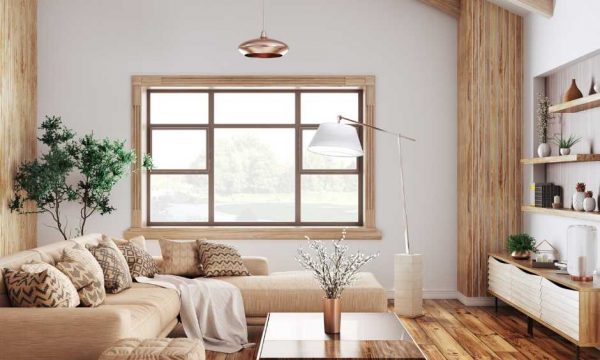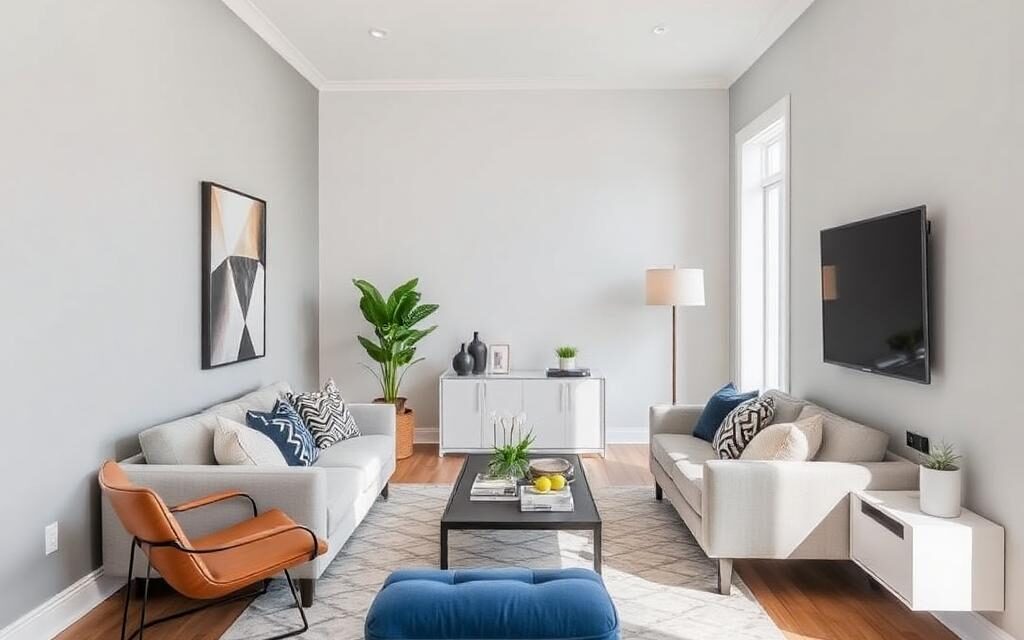
Got a tricky living room? Start by floating your sofa or placing it along the longest wall, then layer in area rugs to carve out conversation zones or reading nooks. Stick to light colors and add mirrors to visually open tight spots, and use slim furniture to keep walkways clear. Fill odd corners with tall plants, shelves, or a cozy chair. Smart lighting and multifunctional pieces pull it all together—discover clever tricks for every awkward shape ahead.
Key Takeaways
- Float furniture away from walls to create defined seating zones and improve flow in long or oddly shaped rooms.
- Use area rugs to visually anchor separate zones and minimize the impact of awkward angles or narrow layouts.
- Maximize corners with custom shelves, built-in benches, or tall plants to utilize otherwise wasted space.
- Choose slim-profile and multi-functional furniture to prevent overcrowding and allow flexible arrangements.
- Hang mirrors opposite windows and use light color schemes to visually expand tight or unconventional spaces.
Maximizing Narrow Living Rooms

When your living room feels like a hallway, smart layout choices can make it functional and inviting.
Start by anchoring your space with a streamlined sofa against the longer wall, leaving clear walkways. Float a small coffee table in front, and tuck a slim console or shelves along the opposite side for balance.
Use area rugs to define zones and carve out cozy nooks—maybe a reading chair in a windowed corner or a compact bench beneath artwork. Stick to a light, unified color scheme to visually widen the room, layering textures for warmth.
Hang curtains high and mirrors opposite windows to amplify light. Choose furniture with exposed legs to keep sightlines open. Incorporating functional style in your furniture selection ensures that every piece enhances both the visual appeal and practicality of your space.
With intentional placement, your narrow living room feels spacious and comfortable.
Making the Most of L-Shaped Spaces

Although L-shaped living rooms can seem puzzling at first, their unique angles offer creative opportunities for zoning and flow.
Start by anchoring one section with an L shaped sofa—this instantly defines a main seating area. Position the sofa to face your focal point, like a fireplace or TV, and let it hug the corner for a cohesive feel.
Use the other “leg” of the L to carve out a reading nook, compact workspace, or dining spot. Don’t ignore awkward corners; add corner accents such as a tall plant, statement lamp, or floating shelves to draw the eye and maximize utility.
Layer in area rugs to visually connect zones, and keep pathways open for an effortless, welcoming passage between spaces.
Furniture Placement for Long and Skinny Rooms
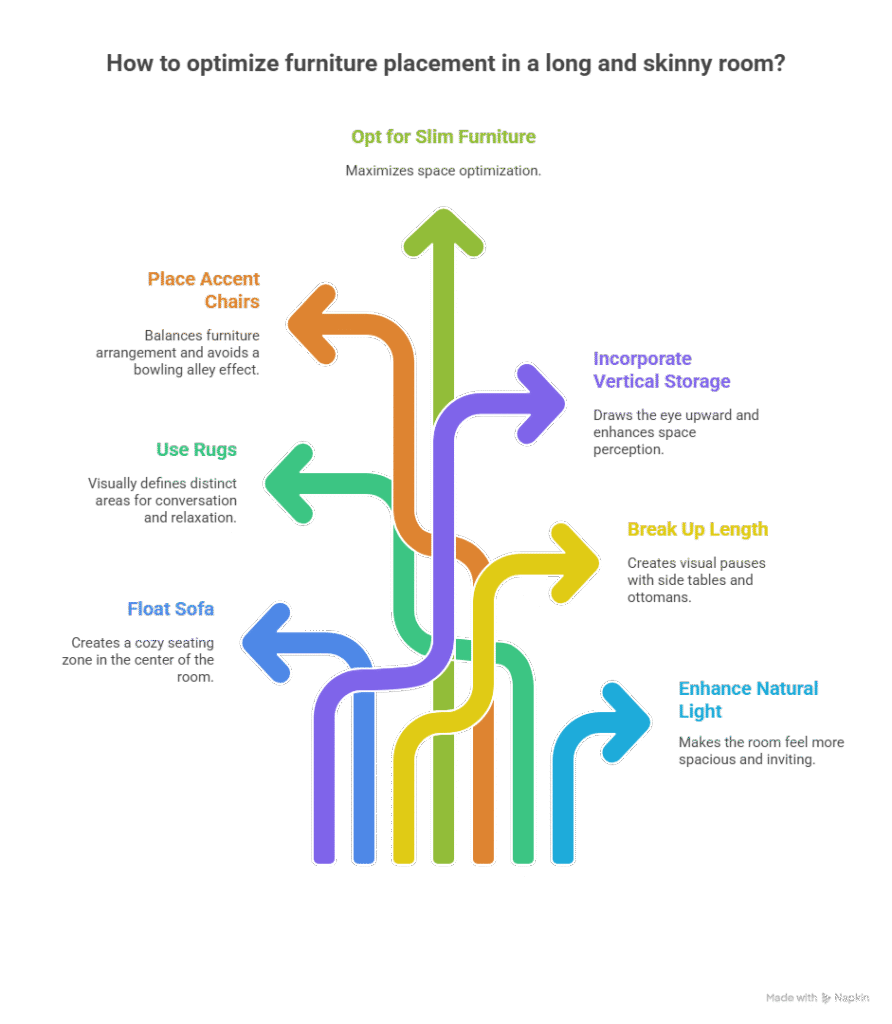
If you’re working with a long and skinny living room, smart furniture placement transforms the space from a narrow corridor into a welcoming retreat.
Start by floating your sofa away from the walls to create a cozy seating zone in the center. Use rugs to visually define distinct areas—one for conversation, another for reading or relaxing.
Place accent chairs opposite the sofa to balance the furniture arrangement and avoid a bowling alley effect. Opt for slim-profile furniture to maximize space optimization, and use vertical storage like tall bookcases to draw the eye upward.
Break up the length with side tables, ottomans, or benches, creating visual pauses. Additionally, consider incorporating natural light into your design, as it can enhance the overall ambiance and make the room feel more spacious.
Solutions for Rooms With Odd Angles
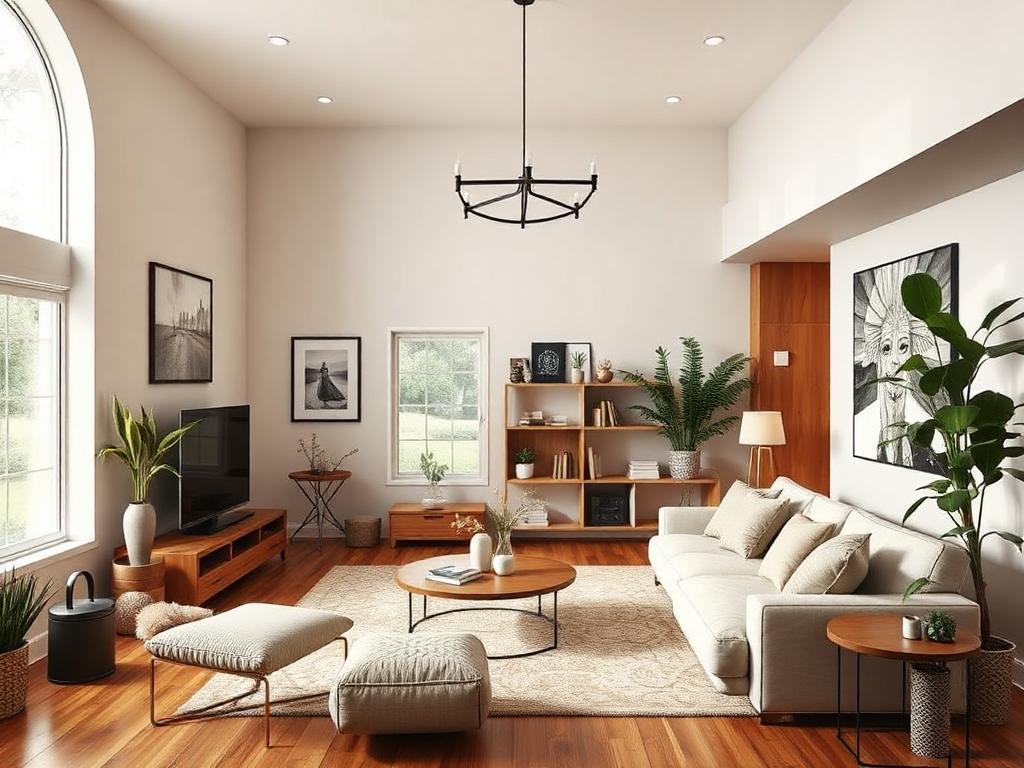
Angles that jut or recess can disrupt the flow of a living room, but there are clever ways to turn these quirks into features.
Start by embracing the unique lines—position your sofa to echo or counterbalance the room’s focal angle. Place accent chairs at strategic angles, using them to soften sharp geometry or define cozy nooks.
Custom shelves or built-in benches can nestle perfectly into recessed corners, making the most of every inch. Try floating your furniture away from the walls, allowing for flexible angle adjustments and better space optimization.
Use area rugs to visually anchor your seating arrangement, drawing attention away from awkward lines. Utilizing mirrors and windows can also enhance natural light in the room, making it feel more spacious and inviting. With thoughtful placement and a willingness to experiment, you’ll transform odd angles into functional and inviting spaces.
Creating Zones in Open-Plan Areas

Open-plan living rooms invite light and flexibility, but without clear boundaries, the space can feel undefined. To add clarity, establish zone definitions using visual cues and furniture arrangement.
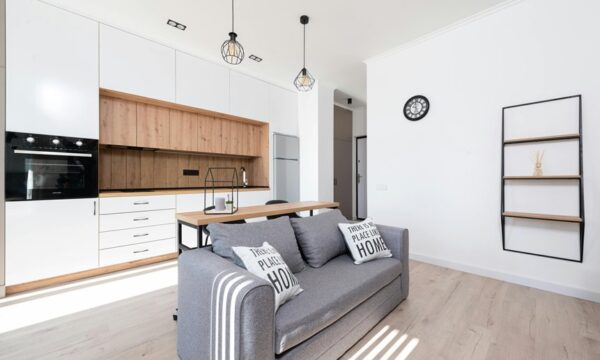
Anchor your seating area with a plush rug, then use a slim console or open shelving as a subtle divider. Position your sofa to face away from the dining area, instantly creating a separate lounge zone. Lighting is key—try pendant lights over the table and floor lamps by the sofa to highlight each function.
Embrace open plan flexibility by allowing each zone to flow visually while still feeling distinct. Choose a cohesive color palette, but vary textures or patterns to differentiate areas.
Greenery, artwork, or even a change in flooring can reinforce your zone definitions without interrupting the open feel.
Utilizing Corners Effectively
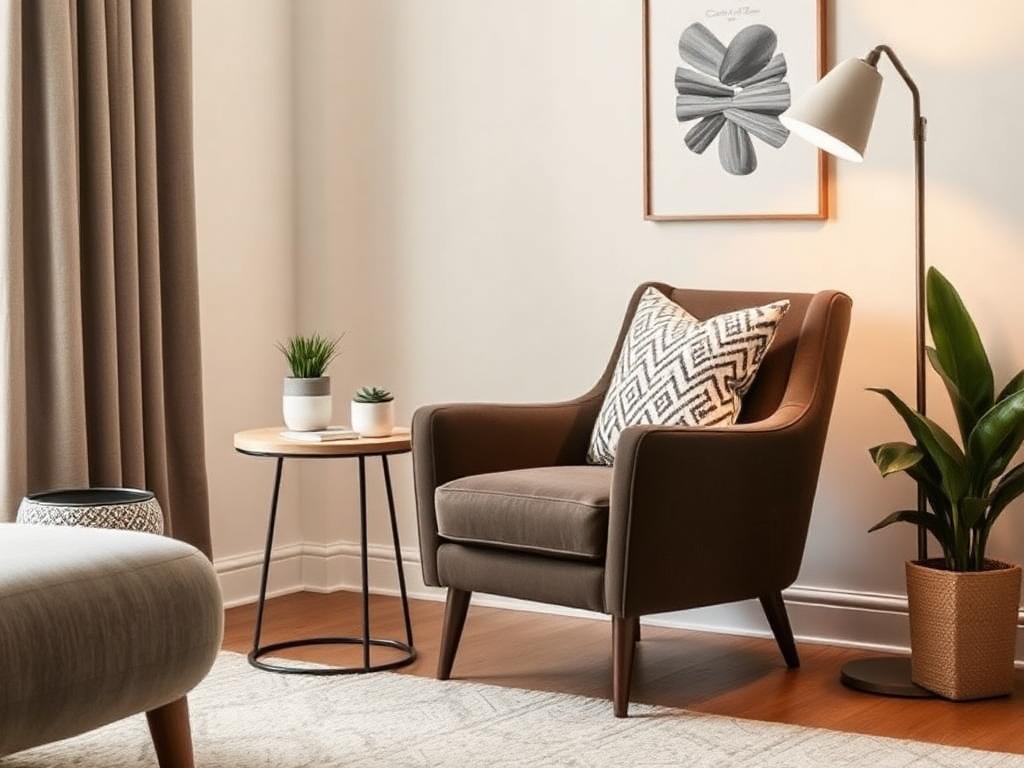
While every living room has corners that often go overlooked, you can turn these tucked-away spaces into purposeful features.
Picture a cozy corner seating arrangement—perhaps a compact armchair paired with a slender side table—that transforms an underused spot into a reading nook or a quiet retreat. If space allows, try a sectional sofa that hugs the corner, maximizing floor area and providing plenty of seating.
Don’t let vertical space go to waste; floating shelves can display decorative accents such as plants, vases, or art, drawing the eye upward and adding dimension. You might also anchor the area with a floor lamp or a tall plant for balance.
Incorporating Multifunctional Furniture
Maximizing every inch of your living room often means choosing pieces that do more than one job.
Think about a sleek ottoman that opens up to hide blankets or board games, or a slim console table that doubles as a workspace and storage center. With dual purpose designs, you can create zones for lounging, working, or entertaining without crowding the room.
Try a sofa bed for instant guest accommodations, or nesting tables you can tuck away when you need extra floor space. Space saving solutions like wall-mounted shelves with fold-down desks let you keep surfaces clear and your layout flexible. Adding open shelves in your living room can further enhance organization and visibility of your essentials.
Every multifunctional piece gives you options—so you can adapt your living room to your needs, no matter how awkward the space may seem.
Lighting Strategies for Challenging Layouts
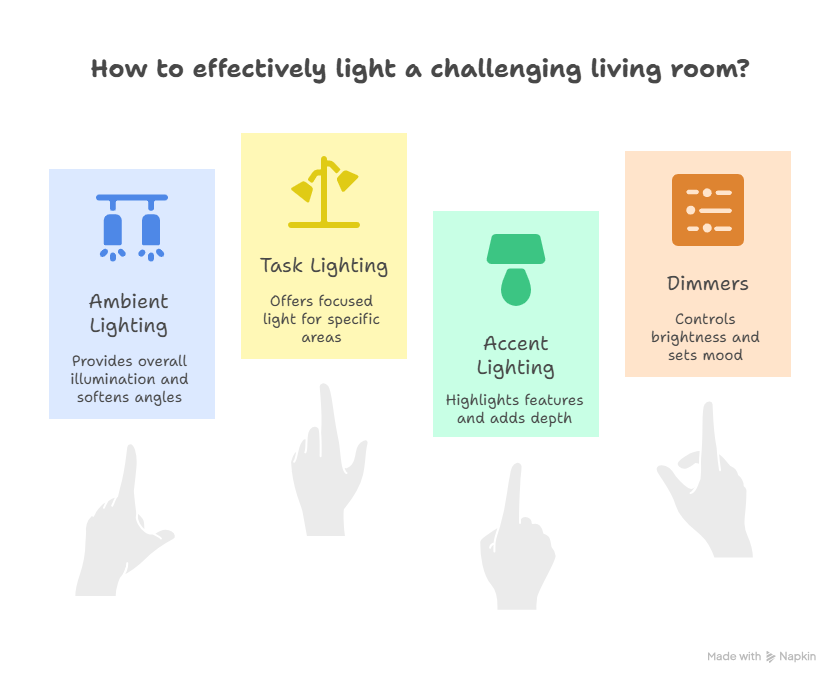
Even if your living room has tricky corners or lacks natural light, you can still create an inviting atmosphere with the right lighting plan.
Start by layering ambient lighting—think overhead fixtures or wall sconces—to evenly illuminate the space and soften sharp angles. In awkward nooks or shadowy recesses, add floor lamps or adjustable track lights to chase away darkness and visually open up the room.
Place task lighting, like table lamps or reading lights, near seating areas or workspaces to provide focused illumination where you need it most. Don’t forget to use dimmers, letting you control brightness and set the mood for any occasion.
Styling Around Architectural Features
As you arrange your living room, let architectural features like fireplaces, bay windows, or columns guide your layout instead of working against them.
Make a fireplace the feature focus by centering seating around it, creating a cozy and intentional gathering area. If you have a bay window, float a loveseat or pair of chairs nearby to invite natural light and frame the view.
For rooms with columns or odd angles, use area rugs to define zones, ensuring furniture placement feels purposeful and not crowded.
Maintain color harmony by echoing architectural materials—think stone, brick, or wood—with your textiles and accessories.
This approach ties the room together visually and functionally, allowing those unique features to shine while supporting a comfortable, balanced layout.
Conclusion
Embrace your living room’s quirks by seeing every angle, nook, and corner as an opportunity. Float your sofa off the wall, layer rugs to define zones, or tuck a reading chair into that tricky alcove. Use multifunctional pieces and flexible lighting to keep things practical and bright. With a little creativity and spatial awareness, you’ll turn any awkward layout into a comfortable, inviting space that feels both intentional and uniquely yours.